If you’re training for fat loss
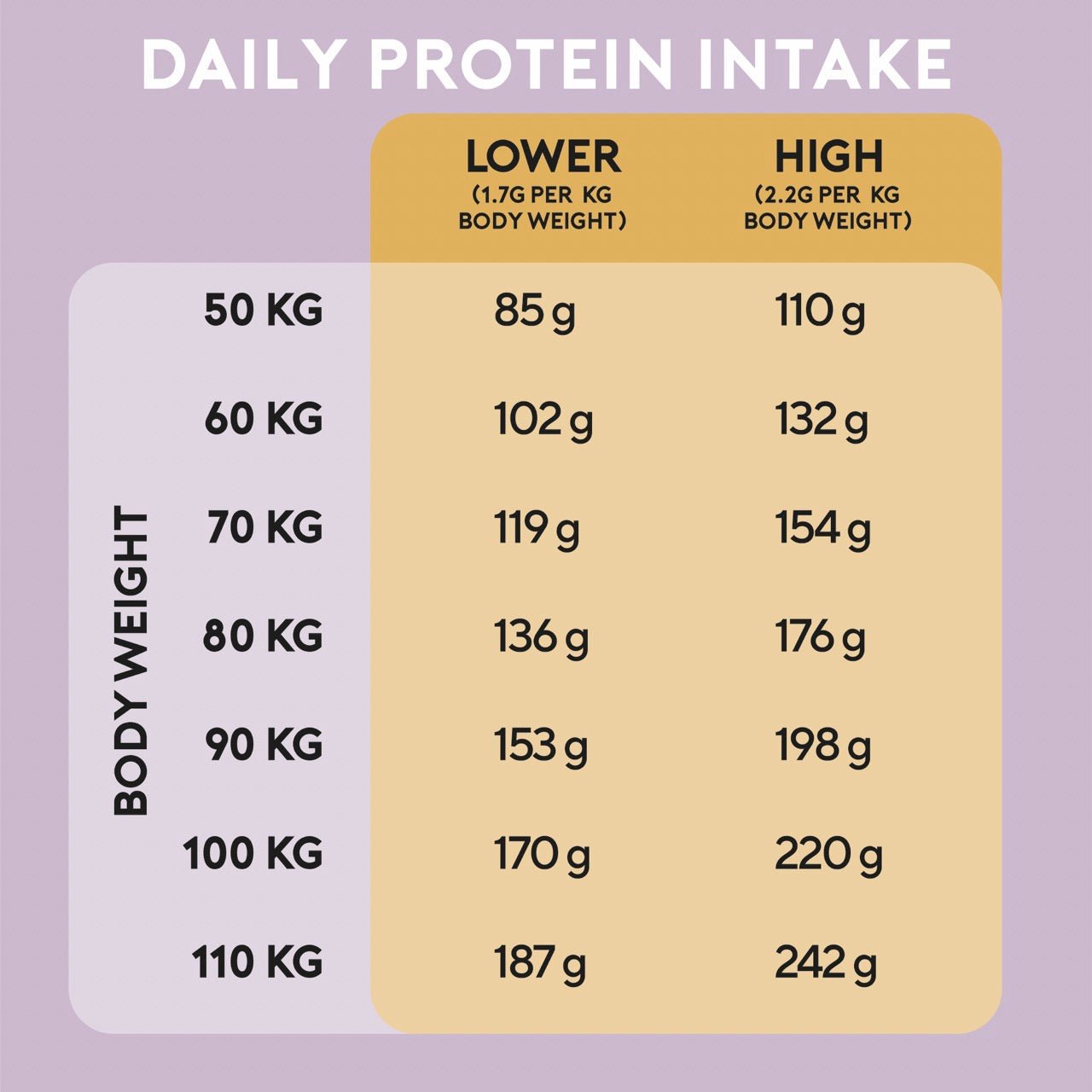
Protein becomes especially important when you’re in a calorie deficit. In this case, aiming higher – around 1.6 to 2.2 grams per kilogram or 0.73 to 1.0 grams of protein per pound – will help preserve lean muscle mass while your body uses stored fat for energy. It also boosts satiety, making it easier to stick with a lower-calorie diet.
If you’re training to build muscle
Building muscle mass improves physical and mental health – but you’ll need to be consuming the right amount of protein to support you in your journey.
To maximize muscle growth and recovery, aim for the upper end of the spectrum: 2.2 to 2.7 grams per kilogram or 1.0 to 1.23 grams of protein per pound of body weight5. Spreading this intake evenly across three to five meals or snacks can optimize muscle protein synthesis, giving your body a steady supply of the building blocks it needs.
Our top tip? Whatever your protein goals, be sure to meal prep for the week in advance. This will ensure you’re getting all the macronutrients (and micronutrients!) you need and help curb those cravings for high-sugar or high-fat foods when you’re hungry and on the go.
How to calculate your protein intake
A simple way to work out how much protein you need is to use your bodyweight as a guide. Most people need between 1.2 and 2.0 grams of protein per kilogram of bodyweight per day, depending on activity level and goals. (For example, someone weighing 70kg would aim for 84 to 140 grams of protein daily or the equivalent in pounds, 154lbs would aim for 112-154 grams of protein per day6.)
For a more exact, tailored idea of how much protein you should be eating a day, the USDA offers a handy DRI (Dietary Reference Intakes) calculator. It factors in your height, weight, age, and activity level to provide you with a report not only on how much protein you need, but with your BMI (Body Mass Index) – plus recommendations on your daily calorie needs and guidance around the water, vitamins, and minerals you should be taking each day.
What are the best sources of protein?
Protein comes from a wide range of foods – from plants like beans, nuts, and seeds to animal options such as poultry, fish, and eggs7. The key is choosing nutrient-rich sources that fuel your body with more than just protein, to support overall health, recovery, and long-term performance.
Lean animal-based protein
Animal-based proteins like chicken, turkey, fish, eggs, and low-fat dairy are considered “lean” because they deliver high-quality protein with less saturated fat than red or processed meats. These foods provide all nine essential amino acids in optimal ratios, making them highly effective for muscle repair, recovery, and overall strength.
Lean animal proteins are also rich in key nutrients like vitamin B12, zinc, and heme iron – all of which play critical roles in energy production, immune support, and oxygen transport8.
When choosing animal-based options, it’s worth focusing on minimally processed sources such as grilled chicken breast, salmon, or plain Greek yogurt. Processed meats, on the other hand, often come with added sodium, preservatives, and unhealthy fats that can work against long-term health goals.
Quality plant-based protein
While all whole plant foods contain some amount of protein, the most protein-packed sources are legumes (chickpeas, lentils, black beans), nuts, and seeds.
One of the top benefits of plant protein is the added fiber, which is essential for weight loss/maintenance, gut microbiome maintenance, and blood sugar regulation9. Plant-based foods also contain a number of essential nutrients: including complex carbohydrates, fiber, vitamins, and minerals.
It’s important to differentiate between whole food sources of plant-based proteins and processed plant-based products, though. Not only do plant-based meat products have less fiber, but they are known to contain large amounts of sodium, processed soy, and heavily processed oils (i.e. canola oil), which can be known to contribute to inflammation in the body over time10.
Animal vs plant protein
Animal proteins are considered complete proteins because they have all nine of the essential amino acids that your body needs, whereas plant proteins are lacking in one or more of these essential amino acids11.
Therefore, the best way to provide your body with a broad range of amino acids – as well as vitamins and minerals – is through variety. By mixing up your meals and snacks and including plenty of veggies, fruits, whole grains, nuts, and seeds, it’s easy to obtain all daily required essential amino acids.
Protein swaps to try
Protein does much more than help us build muscles and power our workouts – it’s fuel for our day-to-day lives. So, now that you know how much protein you need, explore how to get more of it into your diet every day.
Read on – we’ve curated a few of our trusty protein swaps below.
Breakfast protein swaps
Eggs: Swapping out cereal for eggs a couple of times a week when you have more time can increase protein and offer a chance to include other vegetables too.
Fish: Including a serving of smoked salmon with toast will increase protein and omega 3 fats.
Milk: Dairy protein offers some of the highest grams per serving, but if you swap to plant-based milks be sure there is more than 6g protein per serving and that it has been fortified with calcium and vitamin B12. Usually, soy milk has the highest protein of plant-based alternatives.
Spread: Swap a nut butter for butter or cheese as a higher protein alternative.
Lunch/dinner protein swaps
Legumes: Swapping in multiple sources of legumes, such as combining lentils, chickpeas and broad beans diversifies the amino acid profile, making your meal more nutritionally complete.
Tofu or tempeh: If you want a meat-free meal but still want to retain good quality protein, firm tofu or tempeh can be great substitutes.
Quinoa and amaranth: Swap white rice for quinoa or amaranth in any salad or otherwise rice-based dish.
Snack/dessert protein swaps
Yogurt: Swapping to a Greek yogurt or a protein yogurt can increase the nutritional quality of the snack.
Cheese: Swap cheddar cheese slices for a spread of cottage cheese on your wholegrain crackers.
Nuts and seeds: Swapping pecans for almonds, or a seed variety of pumpkin seeds, chia seeds and hemp seeds increase the protein with the added benefit of unsaturated fats.
Tuna: Swap the afternoon sandwich for tuna on whole grain crackers with some tomato.
Dips: Swapping high fat commercial dips for hummus increases the plant-based protein content.
The last thing to note with these protein swaps – and on the wider question of how much protein you should be eating per day – is that packing more protein into your diet doesn’t have to be a chore. In fact, it’s not as hard as you might think to find restaurants that enable you to stick to your nutrition plan – so to learn more, check out our 10 tips for eating healthy while dining out.
Now you know how to calculate protein intake, explore what to eat before (and after) a workout to hit your weight loss or muscle-building goals – next.